9 Minute Read
26-Gauge vs 29-Gauge Sheet Metal: Is the Upgrade Worth it?
When you are pricing out a metal carport, garage, or RV cover, one of the first upgrades you will run into is sheet metal thickness. How does 29 gauge vs 26 gauge steel sheet metal compare?
Most manufacturers include 29-gauge steel as their standard option and offer 26-gauge steel as an upgrade.
If you have never bought a steel building before, those numbers can feel a little backwards, and it is tough to tell whether paying extra for 26-gauge actually makes a difference or if it is just an upsell. Here is an honest breakdown of how the two compare, what changes in the real world, and when the upgrade actually makes sense.
Get Started
It’s easy and quick! Get a quote for an engineer certified carport built to your area’s specifications!

Manufactured in the United States

Competitive Warranties

Licensed and Insured Installers

Outstanding Customer Service
Structures That Stand Strong™
Table of Contents
How Steel Gauge Numbers Work
With sheet metal, the lower the gauge number, the thicker the steel.
29-gauge steel is roughly 0.014 to 0.015 inches thick.
26-gauge steel is roughly 0.018 to 0.019 inches thick.
A few thousandths of an inch does not sound like much on paper, especially when you are looking at numbers on a screen.In practice, 26-gauge steel is about 20% to 25% thicker than 29-gauge steel. When you pick up a full 20-foot or 30-foot sheet of 26-gauge metal, you can feel the extra rigidity right away. It flexes less when handled, feels noticeably stiffer underfoot on a roof, and resists bending when bumped.
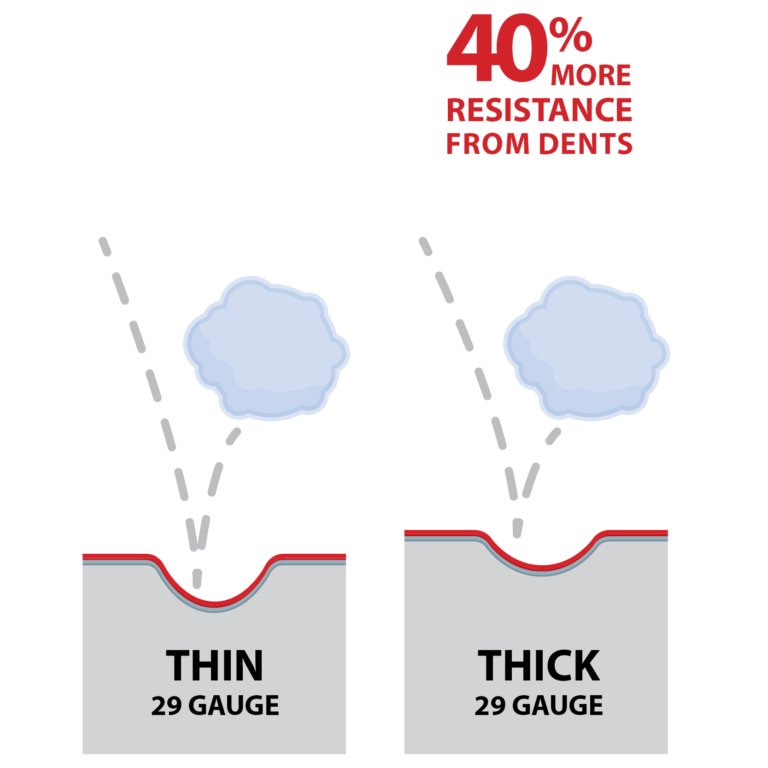
Side-by-Side Comparison: 26-Gauge vs. 29-Gauge Steel Sheet Metal
| Feature | 29-Gauge Steel (Standard) | 26-Gauge Steel (Upgrade) |
|---|---|---|
| Approximate Thickness | ~0.014″ – 0.015″ | ~0.018″ – 0.019″ |
| Cost | Included in base price | Moderate upgrade cost |
| Hail & Impact Resistance | Good for normal weather; can dent in severe hail | Noticeably better resistance to hail dents and branch impacts |
| Panel Rigidity | Lightweight and flexible; can show minor “oil canning” (waviness) | Stiffer, flatter appearance with less flexing |
| Side Wall Durability | Great for standard storage and vehicles | Holds up better against accidental bumps from mowers, tools, or equipment |
| Best Use Case | Standard carports, mild climates, budget-focused builds | Hail-prone areas, heavy snow zones, workshops, and commercial buildings |
Why 29-Gauge Is the Industry Standard for Carports and Metal Buildings
Before assuming you need to upgrade, it helps to know that 29-gauge is the standard across the residential metal building industry for a reason. The vast majority of backyard carports, loafing sheds, and residential garages across the country are built with 29-gauge panels and last for decades.
On a properly framed building, your steel tubing (typically 14-gauge or 12-gauge) does the heavy lifting for wind and snow loads, not the sheet metal skin. If you live in an area with moderate weather and you just need a reliable cover to keep sun, rain, and everyday debris off your vehicles or camper, 29-gauge steel gets the job done without inflating your budget.
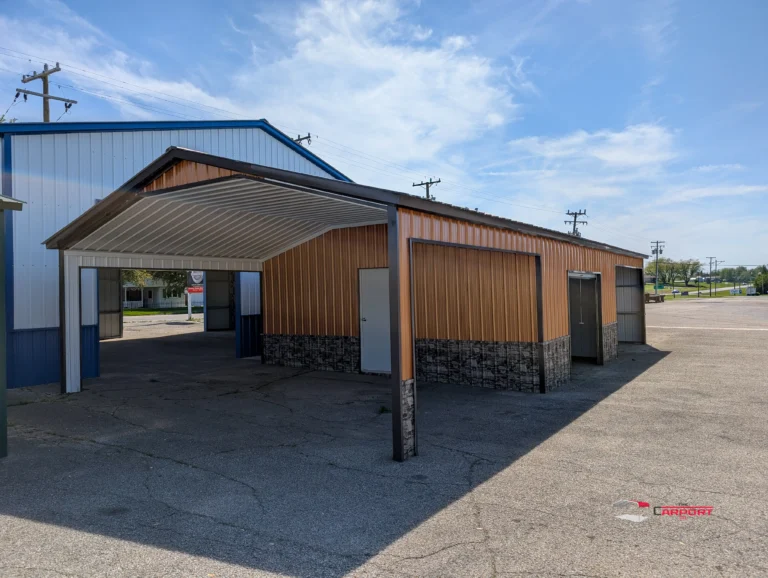
When Upgrading Your Carport/Metal Building to 26-Gauge Is Actually Worth It
Even though 29-gauge works well for most buyers, there are specific situations where spending the extra money on 26-gauge pays off over the life of the building.
1. You Live in a Hail-Prone State
If you live in Texas, Oklahoma, Kansas, Nebraska, Colorado, or anywhere else in the Plains and Midwest that regularly sees golf-ball-sized hail, 26-gauge is worth a serious look. While severe hail will rarely puncture a steel roof, big hailstones can leave heavy dimples and creases in 29-gauge panels. Over many years of sun and weather exposure, severe hail damage on thinner panels can also wear down the protective paint finish faster. Thicker 26-gauge steel absorbs impacts much better and is far less likely to look beat up after a bad spring storm.
2. You Are Building an Enclosed Workshop or Storage Garage
On an open-air carport, nobody is leaning ladders, shelving, or lawn equipment against the walls. Once you enclose a building, the side panels take a lot more everyday abuse. If you accidentally bump a 29-gauge wall with a riding mower, a wheelbarrow, or a piece of lumber, it can leave a crease. 26-gauge siding feels much more solid and forgiving inside a working garage or shop.
3. You Are Dealing with Heavy Snow or There is the Potential for Falling Limbs
In northern states where wet, heavy snow sits on the roof all winter, or on wooded lots where pine cones and tree branches drop onto the roof, extra panel stiffness helps prevent sagging and minor denting between purlins. (If you live in a heavy snow area, pairing a vertical roof with 26-gauge panels is one of the toughest combinations you can buy.)
4. You Want a Cleaner, Flatter Look on Long Panels
Because 29-gauge metal is thinner, long runs of siding or roofing can occasionally show subtle waviness when the sun hits them at certain angles, a normal sheet metal quirk known in the industry as “oil canning.” Thicker 26-gauge panels hold their shape better and tend to lay flatter across wide walls and tall gables.
5. You Want PBR Panels Instead of Standard AG Panels
At The Carport Co., we offer both AG panels and PBR (Purlin Bearing Rib) panels when choosing 26 gauge sheet metal for your structure, so you can choose the profile that fits your build.
Standard AG panels feature 3/4-inch ribs spaced 9 inches apart and work well for most residential carports, garages, and RV covers. PBR panels, on the other hand, are a heavier-duty commercial-style profile with taller 1-1/4-inch ribs and an extra overlapping lip where adjacent sheets meet. That extra overlap gives you a tighter weather seal and added rigidity across wider spans. While both profiles are available with us, upgrading to a heavier 26-gauge PBR panel is especially popular on larger garages, workshops, and buildings exposed to tough weather.
Don't Forget About the Frame Gauge (12-Gauge vs 14-Gauge Steel Tubing)
One common mistake buyers make is focusing only on the sheet metal thickness while overlooking the frame underneath it.
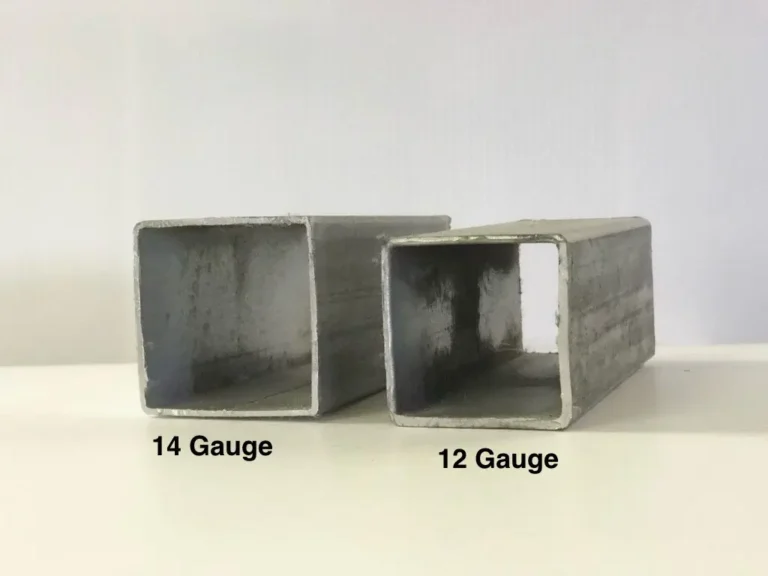
Your building’s skeleton is made from either 14-gauge steel tubing (standard) or 12-gauge steel tubing (heavier). Just like with sheet metal, 12-gauge tubing is thicker and stronger than 14-gauge. If you are in a high-wind or heavy-snow area and trying to decide where to put your upgrade budget first, upgrading the frame to 12-gauge and choosing a vertical roof style should usually come before upgrading the sheet metal. If your budget allows for both, combining a 12-gauge frame with 26-gauge panels gives you a rock-solid structure. For more information regarding frame gauge, please see our 14 Gauge vs 12 Gauge Steel article.
The Verdict: Should You Upgrade to 26-Gauge Steel?
Stick with 29-gauge if you are building a standard carport or residential garage in an area with normal weather, want to keep costs down, and aren’t worried about severe hail or heavy interior wear and tear.
Upgrade to 26-gauge if you live in an area with frequent hailstorms, plan to use the building as an active workshop, have overhanging trees, or simply want a stiffer, heavier-duty panel that will shrug off dents for decades.
Not sure what makes the most sense for your ZIP code? Use our 3D Builder to compare pricing between 29-gauge and 26-gauge in real time, or give our team a call at (888) 293-5588 and we will help you spec out the right setup for your property.

Choose The Carport Co. for Your Carport or Metal Building
In the metal building world, who you buy from matters just as much as the steel you buy. At The Carport Co., we have helped customers across the country find structures that fit their property, their budget, and their local wind and snow requirements.
We are not here to just take your deposit and disappear. Our goal is to help you pick the right setup the first time and get it installed smoothly without unnecessary headaches. If you want to check real-time pricing, test out gauge and panel options, or talk through what makes sense for your lot, request a free quote or give our team a call at (888) 293-5588.
Frequently Asked Questions
Is 29-gauge steel strong enough for a standard carport?
Yes. For most standard carports and everyday residential use in moderate weather, 29-gauge steel is plenty strong and holds up well for years. Your structural framing and local wind or snow load ratings play the biggest role in keeping the building secure, while the sheet metal acts as the weather barrier and skin.
Why is 26-gauge thicker than 29-gauge?
Sheet metal gauges run in reverse, meaning a lower gauge number equals thicker steel. 29-gauge is roughly 0.014″ to 0.015″ thick, whereas 26-gauge is roughly 0.018″ to 0.019″ thick. It is not a massive jump on paper, but on a full-length roof or wall panel, you can feel the extra stiffness and impact resistance.
Will 26-gauge steel stop hail damage completely?
No metal roof is 100% hail proof in extreme storms, and severe hail can still dent steel. However, 26-gauge resists denting much better than thinner 29-gauge panels, especially in areas that see regular hailstorms or falling branches.
Should I upgrade the frame gauge or the sheet metal gauge first?
If you are working with a tight upgrade budget in an area with heavy snow or high winds, upgrading the structural framing (for example, from 14-gauge to 12-gauge) and choosing a vertical roof style usually comes first because those carry the structural load. If your budget allows for both, pairing strong framing with 26-gauge panels gives you extra durability on the exterior skin as well.
What is the difference between AG panel and PBR panel?
AG panels are a classic profile with 3/4-inch ribs spaced 9 inches apart that works great for standard residential builds.PBR panels have taller 1-1/4-inch ribs and an extra overlapping edge between sheets for added strength and weather tightness, making them a great option for larger garages, workshops, and demanding applications.
Table of Contents
Let's Find the Right Structure for Your Property
Ready to protect your vehicles, equipment, or outdoor space? Here’s how to get started:
→ Get a free quote – Visit our Get a Quote page
→ Call us directly – (888) 293-5588 (call or text)
→ Design your own – Use our 3D Builder to customize your structure
No pressure, no runaround. Just honest guidance and quality American-made structures.
Get Your FREE Custom Quote
No-obligation, 100% FREE quote, delivered in minutes.
Our Ultimate Buyer’s Guide covers everything first-time buyers need to know—from understanding gauge thickness to choosing the right roof style to preparing your site.
The goal? Make sure you know all your options before you order, not after installation when it’s too late to add them.